Mike Espy does have a shot. It’s also not a very good one.

On November 6th, 35 elections to the senate took place. Most of them weren’t that competitive, but a couple stuck out as potentially very interesting. Indiana, Missouri and West Virginia had democratic incumbents in red states who could be in trouble. However, today we’re not going to talk about that, because those races are pretty done and dusted. We’re here to talk about the only senate election that is yet to be called, the Mississippi special election.

The election is taking place today, on Tuesday November 27th, because it is a runoff, which means no one candidate surpassed 50% of the vote in the first round where there were 2 republicans and 2 democrats. So, the race moved forwards to today and eliminated everyone on the ballot but the top two vote-getters, who were republican Hyde-Smith and democrat Espy.

Let’s be real here: incumbent senator Cindy Hyde-Smith is a pretty heavy favorite, and that’s the case for a couple of resons:

However, there’s also a couple of reasons why we’re in this mess. For one, Hyde-Smith is an incumbent, yes, but she’s an appointed incumbent, not an elected one. What that means is that this is her first time facing the voters, because she’s been appointed to the office by the governor because of the death or retirement of another senator. In this case, it was senator Thad Cochran who resigned. This may seem minor, but appointed incumbents typically do worse than elected ones. Just look at Minnesota’s two senate races this cycle. Both of the victors were democrats, but elected incumbent Amy Klobuchar won by a very wide 30% margin, while appointed incumbent Tina Smith won by a comparatively anemic 10%.

However, the most important reason are Hyde-Smith’s inflammatory comments on race. She joked about attending a public hanging to a supporter, and she also talked about making it harder for liberals to vote. In case you couldn’t tell, THESE AREN’T THINGS YOU’RE SUPPOSED TO SAY. She has, apparently, gotten away with a half-apology-but-not-really, but this is probably the main reason why this race is competitive. Probably the worst part about the comments is Mississippi’s history of lynchings, being the worst offender among all the states way back when. Truly, Hyde-Smith has proven to be an incredibly inept candidate.

So those are Hyde-Smith’s weaknesses, but what are Espy’s strong points? Let’s go through a couple of them.

First off, he’s a very good candidate. He’s a former Secretary of Agriculture during the Clinton administration and he also was a longtime Congressman from Mississippi’s only blue district. He’s a well trained, well prepared candidate for the job, and he has put up more of a fight than some former city council member would have.

Furthermore, the timing of the election could favor Espy. This is happening a couple of short days after Thanksgiving, so folks who aren’t energized by a campaign may not even realize that they are being called to go to the polls today. If the turnout is similar to those of a special election, then he can make it close.

So, what would an Espy win look like? It’s actually pretty simple: bolstered turnout among black communities, probably needs to go a bit higher than on election day, and depressed turnout among white republicans. If that’s what happens today, then it’ll be very interesting. However, if there are any exit polls that fundamentally contradict this narrative (I don’t know if exit polls will be conducted), then Espy’s probably toast.

And how likely is an Espy win? Nate Silver says it’s around 15%, and I agree. That’s the range where it really could happen and it’s pretty unlikely, so prepare yourself. Mentally. It might be a long night.
The case for Richard Ojeda, Andrew Yang and John Delaney for president.

During the 2018 election, there was a lot of buzz around the race for West Virginia’s third congressional U.S. House district. The incumbent at the time, Evan Jenkins, was retiring to run for senate, so he left an open seat that West Virginia state senator Richard Ojeda thought he could take. It was, by any standard, a tall order; WV-03 was 37% more republican leaning than the nation as a whole, the 43rd most republican district out of 435. His rival, Carol Miller, was ostensibly just a party-line republican, so it’s not like she was Roy Moore bad. However, not everything was uphill for Ojeda. West Virginia is ancestrally democratic, and he was on the ticket with Joe Manchin, a democrat who was running for reelection statewide (and won). In the end though, it wasn’t enough for Ojeda to eke out a win. He lost by 13%, which is still a really good result for D’s. In fact, the WV-02 race -a VERY deep sleeper- ended up being closer than WV-03, democrat Talley Sergent lost by about 11% there.

Not a week had passed since his election loss, but Ojeda decided to jump into the 2020 democratic *presidential* primary. Whether he only is doing this for shits and giggles or really believes he can win remains to be seen, but it’s a bold move to be sure.

He hasn’t been included in any public polls, but I suspect he’d be polling in the Bobby Jindall zone, which is to say pathetically low. Does Ojeda really think he can win?

Probably not, but he’s going to give it a shot anyways. Here’s my thesis: Richard Ojeda, someone who borrows from the left and right wings of the democratic party, won’t be popular with a national electorate, who want someone they can absolutely be sure they can trust for president. He would be too left wing on issues like healthcare to appeal to centrists and too right wing on issues like guns to appeal to progressives. Also, he voted for President Trump.

But, let’s not fool ourselves, he’s probably just doing this so that he can run for a spot at congress again while being remembered in West Virginia. Whether that be challenging Carol Miller or Shelley Moore-Capito, only time will tell. But that’s probably Ojeda’s endgame here.

But Ojeda isn’t the first major (using the word major very loosely) candidate to enter the race. That would be Maryland U.S. Representative John Delaney, who has been running for president since July 28th. July 28th 2017, that is. He’s been running for about a year and a half, and he’s already putting up ads in Iowa, although they don’t seem to be helping much. He hasn’t been included in any Iowa public polls and, to my knowledge, hasn’t been included in any National polls either. He even gave up his House seat to focus on his run for the presidency, which he really didn’t need to do, and may very well result in political suicide. What did he expect?

I also suspect he would be polling in the Bobby Jindall zone, mostly because he’s a moderate, and moderates are seriously considering a group of candidates like Biden and Klobuchar. Delaney, presumably, isn’t in that group.

To be brutally honest for a second here, I don’t know what he expected. Did he think he was the next Donald Trump? That he’d come back from behind and shock everyone? Well, at least for now, he certainly hasn’t, and it doesn’t look very good for John.

The last minor-league candidate we’ll be looking at today is Andrew Yang, a young, leftist businessman running an anti-automatization and pro-UBI campaign. He’s about as likely to catch fire as the other two, but he’s appealing to the purest of progressives. You know the ones, those that think Elizabeth Warren isn’t liberal enough. I really don’t know what else to say about Andrew Yang other than this: if this is just a setup for a future political career then bravo, he’s certainly got the attention of the people he needs, the berniecrats. If he truly believes that he can win and seriously wants to make a run then I’d say he’s doing well so far. He’s doing what he needs to do to have a tiny chance, basically. What he really needs is some kind of major, incredible, unprecedented shift from Sanders and Warren to him, and that would presumably happen by them not running. If neither Sanders nor Warren run, then Yang might have a chance. If they do, he’s probably doomed.

To borrow a phrase from Ezra Klein, these kinds of candidates are the underpants gnomes of the presidential run, and here’s what they’re basically thinking:

Step 1: Run for president!

Step 2: ???

Step 3: Yay I won!

Ok, maybe it’s not exactly that, but you get the idea. Thay all think they are going to be the next Donald Trump. A candidate that no one saw coming and took the party by storm. However, there’s one main difference: Donald Trump started rising in polls almost inmeaditely after he made his announcement. John Delaney has been running for a year and a half. Andrew Yang has been running for a year. We still don’t know what’s going on with Ojeda but I suspect it’s not favorable to him. So, with just a tad bit of caution, I think these candidates are going to fail. Especially John Delaney. Who would make a decision like that?

So, to bring this series to a close, here are the strengths and weaknesses of minor-league candidates:

STRENGTHS:

  • Upset potential.
  • Less political baggage, as they haven’t been closely followed by the press for months.
  • Excluding John Delaney, they look like outsiders, which can be a major plus.

WEAKNESSES:

  • Literally everything else.

You might scoff at that last part, but think about it. What else do these candidates have going for them? Nothing. Absolutely nothing. They are running against well-funded, often well-liked candidates. These lesser-known candidates might not be disliked by the public, just unknown. One thing is certain though: almost no other candidates have a steeper hill to climb.


This is the final entry of «The case for…», at least for now. I’ll bring you my power rankings on Monday, and I’ll also write a short piece about the Mississippi senate election on Tuesday. Hope you enjoyed this series.

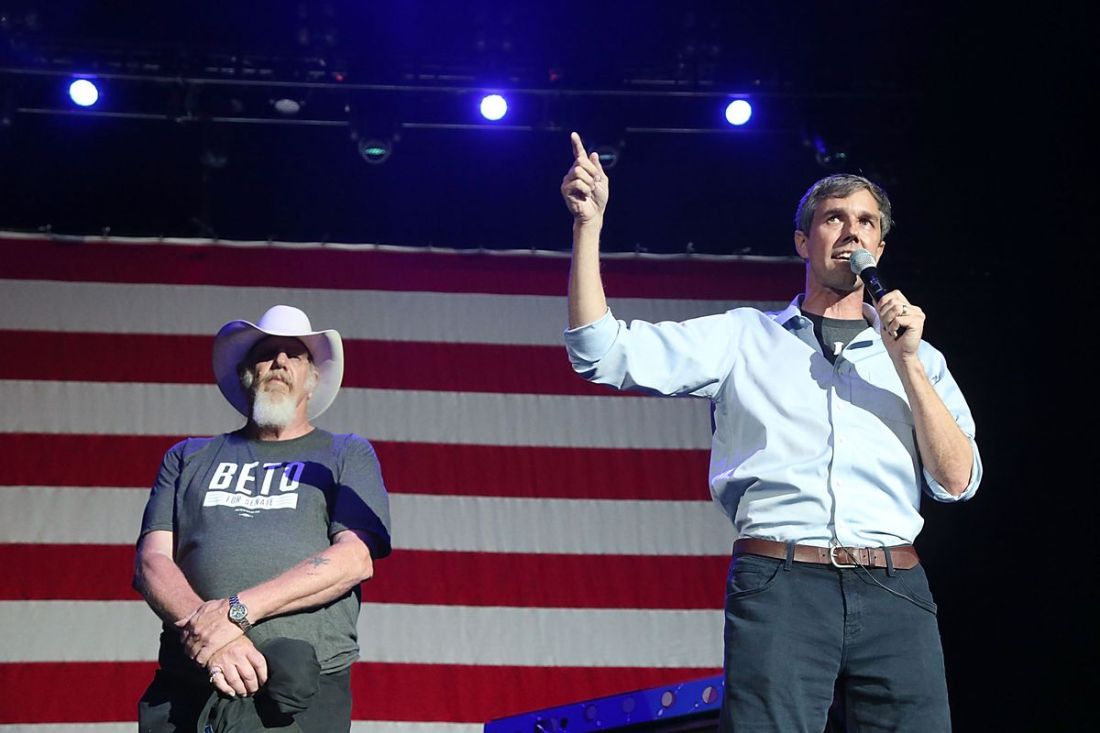
The case for Beto for president.

For way too many months, the Texas senate race was both closely followed by most people and utterly dismissed by some prominent personalities. Kavanaugh seemed to give Ted Cruz a bump, even if it probably wore off, and early indicators looked good for his challenger, Beto O’Rourke. Early voting, while it doesn’t mean much, looked pretty decent for democrats, an some final polls showed the race really close.

And it was. The Texas senate race was closer than many expected. Early on election night it even seemed like Beto had a puncher’s chance at unseating Ted Cruz, which would have been an upset by a lot of standards. However, Cruz retained his seat by about 3%, and he should be happy that he was up this year and not 2022 or something similar, as Texas is getting bluer.

Things aren’t over for O’Rourke, though.

If you were following this election very closely, as I was, you knew that Beto could potentially run for president and that his ideal scenario in the Texas senate election if he wanted to make a run would be for Cruz to pull out a squeaker. If he had won that senate seat, inmeadiately launching a presidential run a couple of months afterwards would be very bad optics, and wouldn’t bode well for him while seeking reelection. Meanwhile, let Cruz prevail by 10 points and you just look like a loser who lost by more than Hillary Clinton in a way better year for D’s. This way, he looks like a good candidate that got unlucky, and it would be a shame to let a very good candidate go to waste like that right?

I’m not even close to certain that Beto is running, but let’s speculate anyways. What would that apparatus look like?

Well, out of all the field he probably has the most options when it comes to choosing a lane to run in. Candidates like Sanders or Warren can’t lose their cred with more liberal voters, otherwise they would be left with no base and collapse. Joe Biden has to be Joe Biden, he can’t just become liberal all of the sudden after more than 40 years of being more of a centrist. Other potential candidates like Kamala Harris, Cory Booker and Amy Klobuchar have reserved themselves a bit more flexibility, but they have also boxed themselves into a corner somewhat in recent months (Booker and Harris have moved left while Klobuchar has stayed put).

While Beto would also have some baggage (he ran in Texas mostly as an open liberal) he was also a very party-line democratic backbencher in Congress, so if he decides he’d rather run a more establishment campaign then he can certainly do that, albeit losing  trust with the more progressive wing of the democratic party.

But enough about campaign ideology. What about the primaries? Would he have a chance? In short, yes.

Beto has proven that he can attract white voters even in a red state like Texas, and guess what kinds of voters Iowa and new Hampshire have? You guessed it, white, working class and, at least within the democratic party, largely progressive. He would need to have a strong result in Iowa to allow himself to have a weaker result in New Hampshire, and if that didn’t kill his momentum then he’s off to the races.

He could also have a real chance to pick up some sun belt states, particularly Arizona, and he would obviously wield a massive lead in Texas, which has tons of delegates. I’m unsure about how he would fare in Nevada and South Carolina, but if he can pull off a win in either then he would probably be the frontrunner.

Furthermore, what about the general election? What would his particular map to 270 look like?

It would be an understatement to say that I have no idea. It seems like O’Rourke is strong with all constituencies but not particularly so with any specific one of them. Do southern voters feel the «Beto-mania»? Are white midwestern voters excited by his message? I think the former is more likely than the latter, but I can’t say for sure.

So, finally, here are the main strengths and weaknesses:

STRENGTHS:

  • Good enough appeal in early primary states (and in most states, really).
  • An ability to excite the democratic base.
  • An ability to convince moderate voters.
  • A wide array of ideological possibilities for his campaign.
  • A wide map to get to 270 electoral votes.
  • He would be one hell of a VP pick.

WEAKNESSES:

  • His potential strategy to appeal to both wings could backfire and end up appealing to no wings.
  • He could just fizzle out like so many «rising stars» (also see, Marco Rubio).
  • We don’t yet know how strong his appeal would be nationwide, and he needs more than just Texas to win.
  • A presidential run, if not terminated soon enough, would prevent him from running for senate again and do lots of damage to his career.

Overall though, I really think the pros outweigh the cons here for O’Rourke. He has proven that he can run an intelligent, effective, good campaign, and that’s pretty much all he needs here if things go his way. He would be a very robust candidate.

But perhaps this is getting a bit ahead of ourselves. We don’t even know if he intends to run or if he is just keeping his options open. One thing’s clear though: the future is bright for Beto O’Rourke.


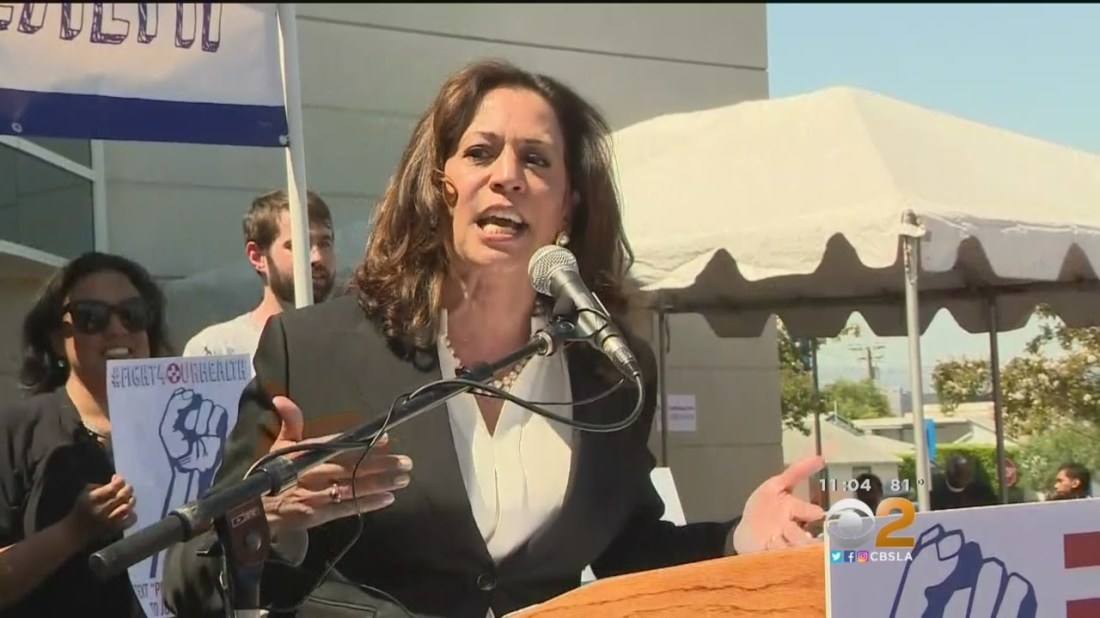
The case for Harris for president.

In 2016, then attorney general Kamala Harris defeated longtime US House representative Loretta Sanchez in an election to Barbara Boxer´s senate seat. Shortly thereafter, rumors spread that the democratic establishment had chosen her as the DNC pick for president in 2020. They thought Harris could appeal to minorities enough to secure a path to 270 electoral votes, and they also thought that she could have enough appeal to both wings of the democratic party to win a primary.

Will that ultimately be how things shake out for Harris?

Well, it depends. Pretty much everything I mentioned above has to happen for President Kamala Harris to happen. If you are going to run in the primary as a progressive but also someone who has the baggage of usually being more conservative *cough cough* Kirsten Gillibrand *cough cough*, then it´s very hard to strike a balance, given liberals are always incresing their standards for purity tests.

It’s also not very rosy elsewhere for the Harris campaign when it comes to early states. If her campaign does very well, she could pull-off an Obama type win in Iowa, and go on a run after that. However, she would almost have no chance in New Hampshire. Obama lost there pretty badly and Biden, Sanders or Warren would probably go on a run there before anyone could catch them, given that they are from New England and New Hampshire tends to vote for candidates from neighboring states.

So, of the early states, Harris really needs to pull off a win in Iowa, or she’s rather doomed. But it can’t just be a squeaker, or a pretty weak win. It has to be an upset.

That’s how it worked for Obama in 2008. He took Iowa and his main rival, Hillary Clinton, came in third (John Edwards finished second). Yes, Obama lost New Hampshire, but he won most of the remaining states (especially southern states) because he had built up momentum from that Iowa win. Harris has to pull off a similar feat.

To be completely clear, I’m not saying candidates can’t come from behind in primaries and win, or that any candidate who does poorly in Iowa mandatorily has to lose, but it’s just pretty unlikely. Iowa and New Hampshire are your two big chances if you’re a candidate, and you better deliver in at least one of those states if you wanna keep your campaign alive. It’s not impossible to imagine Harris losing both Iowa and new Hampshire, but then going on to take Nevada and South Carolina by good margins. Pull off a California blowout on Super Tuesday and she’s probably the frontrunner. But I think it’s also pretty likely that she faulters in both of the early states, her momentum erodes nationally and she pulls a Marco Rubio in California.

But, let’s assume for a second that Harris does well across the map, gets a large enough number of delegates from southern states and goes on to get the nomination without a contested convention. What would a general election map for Kamala Harris look like?

Well, kind of the opposite from Biden and Sanders. She would probably do worse in the rust belt and midwest just by virtue of being a black woman and she would do better in the south and the sun belt for pretty similar reasons. She would have a built-in advantage in Florida, especially with the passing of Amendment 4 on November 6th, Georgia, and maybe Texas and Arizona, although I’m a bit less confident about that. While I also think she wouldn’t have much trouble in Minnesota, she could have a bad time in Wisconsin, Pennsylvania and especially Michigan, which is getting swingier.

So, you know the drill. Strengths and weaknesses:

STRENGTHS:

  • Great appeal to voters of color.
  • Real path to the nomination through southern states.
  • Establishment backing.
  • Some progressive backing, as Harris has pivoted to the left.
  • Built-in advantages in states with lots of electoral votes (FL, GA, TX, AZ, more?).

WEAKNESSES:

  • No appeal to white working-class voters.
  • A tough first couple of states for the campaign that she would presumably run.
  • Trying to run in both lanes of the primary could prove to be difficult.
  • A real possibility of stagnation (more on that below).

You might be noticing a pattern here. Most candidates have more strengths than they have weaknesses, but that’s mostly because these are the ones that have the best chance to win so it’s not a very good way to look at it. Harris also has less of both because, well, I’m unsure of what kind of campaign she will run. But if you want my opinion, I think it’s more likey that we’ll be looking at the story of a paper tiger, a la Marco Rubio, rather than the story of president Harris. But, she’s in here for a reason, after all.

Also, you may have noticed the lack of an article yesterday. It happened for unrelated reasons, but I guess that Wednesday is now official Young Politics day off.

Have a happy Thanksgiving.


The 2018 races that are yet to be called.

Rep. David Valadao.

While I’m sure a lot of people wish the election could be done and dusted right the day after, this is really never the case. Sure, most of the races get called the day of the election (even when they shouldn’t have been) and most of the closely watched elections get called without all of the returns being in. However, every election cycle there are always a couple of races that have to go into overtime. Be it mail-in ballots, of which there are a lot of in California and Washington, recounts or provisional ballots. Here are the races that are yet to be called as of November 17th.

CA-21, David Valadao (R). 538 rating: Toss-up. Valadao has looked safe for most of the cycle, even as he got outraised in the last quarter (Valadao still led in overall fundraising). This held through election night, although the margin was, perhaps, closer than it should have been. Some may have called it too close for comfort. Since then, the race has substantially tightened. Valadao now leads Cox by 1%, or ~2,000 votes. Cox has closed the margin by winning more ballots that were counted after election day, and by a substantial margin at that. It’s still unclear if TJ Cox has enough votes in the counties where he’s favored to overturn Valadao’s lead, but this is worth keeping an eye on.

UT-04, Mia Love (R). 538 rating: Lean R. After election night, it seemed Love had been defeated by Ben McAdams (D) by a margin of about 3%. However, Love has made up that difference by getting massive amounts of non-election day votes in Utah county and substantially chipping away at McAdams’ lead in Salt Lake county. She’s actually in the lead now by ~400 votes. Not an impossible comeback, but challenging to be sure. How does one turn that around? Provisional ballots. There are about 35,000 provisionals that are left to be counted, and we have no idea where they may be coming from. If Dems can win this batch by a big enough margin, they may be able to turn this one around.

GA-07, Rob Woodall (R). 538 rating: Likely R. Republican Rob Woodall is ahead of Democrat Carolyn Bourdeax by ~420 (heh) votes, and I don’t think there are any ballots left to count. It is moving on to a recount. It’s unlikely that Bourdeax could end up winning after the recount is done, but it’s close enough that it deserves to be considered competitive.

NY-27, Chris Collins (R). 538 rating: Likely R. Not sure what to think here, actually. Seems like Collins should be safe, but there are enough uncounted provisionals that it’s not impossible for McMurray (D) to turn that around.

I guess that we’ll just have to see how these unfold to get a clearer idea of where these races stand. However, not counting state legislatures, once these races are done the election will finally be over.