Elizabeth Warren, Tulsi Gabbard and the rest.

On December 31st, 2018, Elizabeth Warren announced that she was forming an exploratory committee to consider a run for president. This is the first step many candidates take in their journey for the presidency, and Warren is already touring through early states like Iowa and New Hampshire. It would be, to put it mildly, pretty damn unprecedented for her to not run for president after announcing an exploratory committee.

I have been pretty bullish on Elizabeth Warren in the past, but she’s had some rough patches since I published my last entry on this blog: bad net favorability ratings, dwindling enthusiasm, poll numbers falling, etc. And let’s not forget the whole DNA test debacle. All in All, the senator from Massachussets has seen her stock in the upcoming primary decline in the last month.

However, she still is one of the leaders of the progressive movement in the Democratic Party, and even if her results end up underwhelming she would need to be shut down before she wasn’t a force to contend with anymore. What I’m trying to say is: Senator Warren is going to be a pretty formidable candidate, and most other candidates who plan on winning are going to have to deal with her very high ceiling of possible support.

Candidates like Elizabeth Warren work because she appeals to both Party Loyalists (as Nate Silver calls them) and the left. She has been very progressive on a wide range of issues; from Medicare-for-all to free college, while also being part of senate leadership. She has influence inside the Senate’s Democratic caucus and has worked with leadership since she was elected in 2012.

I have already talked extensively about Warren in different entries, so I won’t repeat myself. But her running doesn’t only impact her chances.

Senator Bernie Sanders from Vermont was probably counting on an Elizabeth Warren run not happening, as they both have strength among Millennials and the left. If Warren hadn’t run, then Sanders would probably have had more of a base to build upon and, consequently, an easier time. Sanders doesn’t seem to be going back on his efforts to run though, and POLITICO just released a piece about how he has «staffed up» recently, so who knows. Most relevant candidates should have announced by March, April at the latest, and the campaign will start to heat up soon thereafter when the first debate happens in June.

Another candidate that has announced her candidacy recently is Tulsi Gabbard, representative from Hawaii. I don’t believe Gabbard will really register at all in polls or debates, purely because there are so many attack lines. The social-conservative views that she used to hold, her meetings with Assad, etc. She has said that she has left her conservative views behind, but a lot of people are still skeptical. Just look at a recent debacle, where the congresswoman called senator Mazie Hirono «bigoted» for opposing the nomination of a catholic judge with a conservative record (Gabbard has gone on to oppose his nomination).

To point out another example of just how problematic her past views may be, just look at how she referred to a newspaper approaching her for a comment when she was still a state senator. Long story short, she called them the «homosexual extremists of Ed Case». A lot of voters may hear that and think «yuck. I’m not voting for her.».

Given everything I just mentioned, It’s hard to see her making a breakthrough. Her candidacy is predicated on progressive values, but they may be hard to reconcile with her past views and some present actions. If it was my choice, I would put Gabbard below the top 10 candidates that are most likely to win the nomination. Betting markets think there’s a 20% it won’t be on of the top 10 folks, so Gabbard is sharing a not-so-big percentage with a lot of people. We’ll see how this unfolds, but it’s hard to see her winning the presidency. After all, she may just want to gain a national profile.

We are far from over though. Kirsten Gillibrand is supposed to announce her run tommorow on the Colbert report (Tuesday). Harris and Booker are both expected to make announcements before the end of January. Sanders is starting up the old campaign machine he had been saving since 2016. Other prominent Democrats like Amy Klobuchar, Beto O’Rourke and Joe Biden are reportedly very close to a decision. And some lower tier candidates like Julián Castro and the aforementioned Tulsi Gabbard have already announced their intentions and are getting out the door quick. The 2020 machine is gearing up, and you won’t hear it stop working until November of next year. I say: god bless.

To anyone who has been wondering where I was for the past couple months, I was finishing exams and enjoying the Holidays. Didn’t really feel like writing back then, but I’m back in shape.
2020 candidates ranked.

It’s been a week since I started my «The case for» series, and I’ve writen about all the major candidates and three minor ones since. On Sunday, I promised that today I would bring you my power ranking of 2020 democratic presidential contenders, a mere 15 months away from the Iowa caucuses. I’m not going to beat around the bush now, but I’m going to do a whole lot of that after the ranking itself, so there’s no shortage of information. Without further ado, here they are:

  • 1: Joe Biden.
  • 2: Elizabeth Warren.
  • 3: Bernie Sanders.
  • 4: Beto O’Rourke.
  • 5: Kamala Harris.
  • 6: Amy Klobuchar.
  • 7: Cory Booker.
  • 8: Kirsten Gillibrand.
  • 9: Sherrod Brown.
  • 10: Steve Bullock.

Some of you may be shaking your clenched fists at the screen in rage, wondering how I could be so stupid to put Harris in 5th or Sanders in 3rd, etc. Just hear me out, ok?

We’ll go from bottom to top, and look at each candidate’s strengths and weaknesses.

10: Steve Bullock: Steve Bullock’s standing in a hypothetical 2020 primary has greatly diminished, at least in my opinion. He’s a moderate governor from the midwest who has been elected thrice to statewide office in a red-ish state, so he could have appeal with rural voters. However, what he was probably hoping for was a lesser wave by Democrats or no wave at all, so that the more moderate narrative about how the party has moved too far to the left would be more palatable among the party’s base. His best chance at staying in public life will probably come from challenging senator Steve Daines, rather than a run for president.

9: Sherrod Brown: the senator from Ohio has proven that he has appeal beyond partisanship, as he won reelection with a comfortable 6% margin while democratic candidate for governor Richard Cordray lost by 4%. He’s part of the populist-progressive wing of the democratic party, somewhere close to Beto O’Rourke, and he would have more appeal in the midwest than other candidates would. He’s also publicly mused about a 2020 campaign, so it’s not like he’s a Michelle Obama. He would be a force to be reckoned with.

8: Kirsten Gillibrand: the junior senator from New York has moved decisively to the left in recent months. She was the first member of the senate to call for abolishing ICE, she’s no longer taking corporate/PAC money, she has endorsed medicare-for-all, called for a 15$/hour minimum wage and criticized Amazon’s opening of an HQ in Queens. She would certainly be a well-funded candidate from a populous state, but she would have to explain some very moderate votes from back when she represented upstate New York.

7: Cory Booker: Booker is an eloquent, charismatic speaker, and he has also moved to the left recently, in a similar way to Kirsten Gillibrand. I’m pretty Booker skeptical for 2 reasons, though: 1- He’s not well liked among progressives for his dealings with Big Pharma, and 2- he may turn off moderates with his newfound lefty message. He could turn out to be a great candidate or a paper tiger, but we’ll just have to see.

6: Amy Klobuchar: it would be hard to imagine a worse year for a candidate like Klobuchar to really shine, because she would almost certainly be the front-runner in a year like 2016 if she had gotten the type of attention that she’s getting now. She’s eloquent, soft-spoken, comes across as truthful and she’s also more of a centrist, which means she could be a female alternative to folks who don’t want to back Biden. She could be a very good candidate, but she’s fighting for the same lane as Biden, and it’s unlikely that she’d emerge victorious from that fight. Oh, and she won reelection in a landslide.

5: Kamala Harris: you may have deducted from my piece on her a couple of days ago that I’m a little bit Harris-skeptical, and you would be correct. I don’t think she’s doing as much as she needs to do to have as good of a shot as folks on CNN think she does. She would, presumably, be a good unity candidate between black voters and the more liberal wing of the party, but none of those groups strike me as incredibly enthusiastic for her. I don’t know, maybe I’m just stupid, but I don’t see it.

4: Beto O’Rourke: I’m still not sure what to make of O’Rourke’s hypothetical campaign, or whether he would actually have a lane to run in. But I basically think there’s 2 ways this can go: either he runs a grassroots campaign that’s very energizing and convinces moderates in the general, or tries to be a unity candidate in the primaries and goes down in flames. We’ll just have to wait; we’re not even all that sure on whether he’s running or not.

3: Bernie Sanders: some people may think this is too high, some may think it’s too low, but I think that it’s about right. The senator from Vermont has proven that he can win over votes by mounting an incredibly competitive challenge to Secretary Clinton in 2016, and he’s currently second in public national polling. The only reason why he’s third and not second in my ranking is because I think Warren is more likely to convince Sanders that it’s her moment than the other way around. But if Bernie runs and Warren doesn’t, then Bernie moves up a spot, perhaps even two.

2: Elizabeth Warren: she is the darling of the left wing of the party and a political behemoth; she has made a name for herself in a matter of a couple of years and has been able to fight for both sides of the aisle occasionally. She just seems like an actually good unity candidate, which is something that’s pretty rare these days. While I’m sure a lot of progressives wouldn’t vote for her because she’s not «pure enough», most would pull the lever for her over someone like Biden in a heartbeat. And establishment dems are largely okay with her too, seemingly classifying her as «good enough».

1: Joe Biden: I’m not sure I’ve thoroughly convinced myself that Biden still deserves to be number one, and it also doesn’t feel right. But it feels less wrong, and that’s really what matters. Biden is a mainstay in democratic party politics, a familiar face, and most democrats would be perfectly fine with him. The reason why he’s so high is that he’s likely to crush anyone in the moderate lane of the primary, thus securing that part of the electorate for him. Bernie, Warren, Harris, Booker, Gillibrand: they would all have to fight for the same voters. Biden doesn’t need to do that. Oh, and he’s polling first.

I’m sure people will have their disagreements, I personally disagree with most of the picks on CNN’s list. But I hope I persuaded you on at least one of these picks, and be sure to let me know how much of a cuck I am.


I’ll be right back with you all tomorrow with a piece on the Mississippi special election.


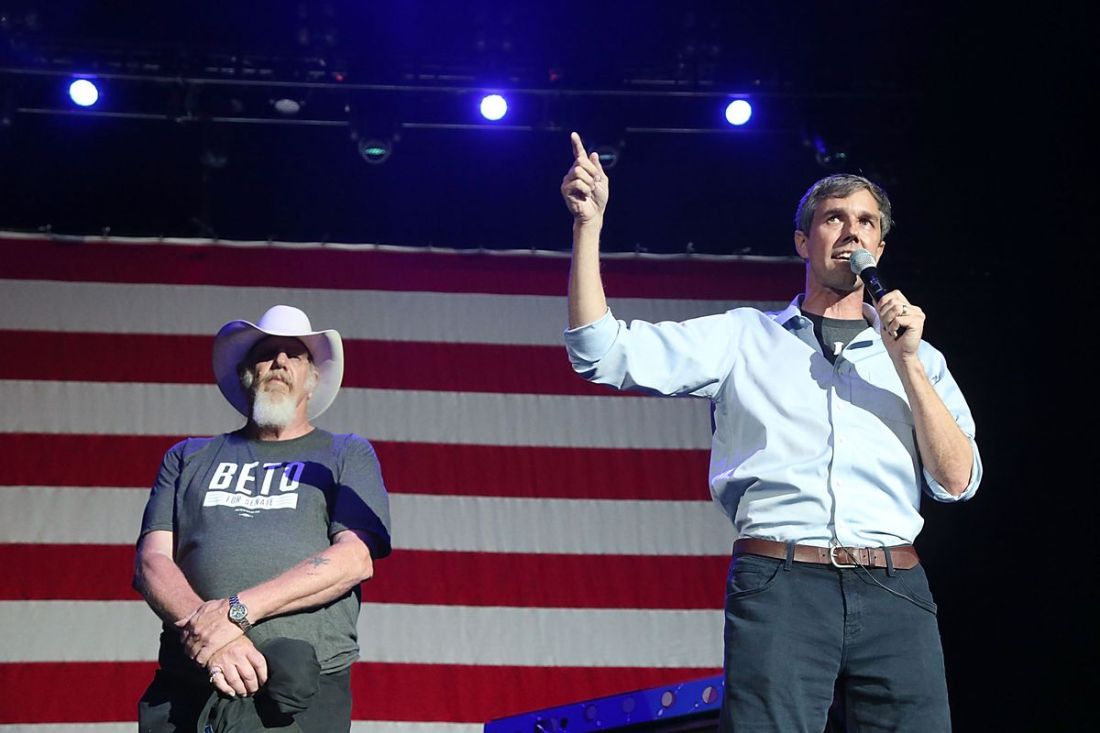
The case for Beto for president.

For way too many months, the Texas senate race was both closely followed by most people and utterly dismissed by some prominent personalities. Kavanaugh seemed to give Ted Cruz a bump, even if it probably wore off, and early indicators looked good for his challenger, Beto O’Rourke. Early voting, while it doesn’t mean much, looked pretty decent for democrats, an some final polls showed the race really close.

And it was. The Texas senate race was closer than many expected. Early on election night it even seemed like Beto had a puncher’s chance at unseating Ted Cruz, which would have been an upset by a lot of standards. However, Cruz retained his seat by about 3%, and he should be happy that he was up this year and not 2022 or something similar, as Texas is getting bluer.

Things aren’t over for O’Rourke, though.

If you were following this election very closely, as I was, you knew that Beto could potentially run for president and that his ideal scenario in the Texas senate election if he wanted to make a run would be for Cruz to pull out a squeaker. If he had won that senate seat, inmeadiately launching a presidential run a couple of months afterwards would be very bad optics, and wouldn’t bode well for him while seeking reelection. Meanwhile, let Cruz prevail by 10 points and you just look like a loser who lost by more than Hillary Clinton in a way better year for D’s. This way, he looks like a good candidate that got unlucky, and it would be a shame to let a very good candidate go to waste like that right?

I’m not even close to certain that Beto is running, but let’s speculate anyways. What would that apparatus look like?

Well, out of all the field he probably has the most options when it comes to choosing a lane to run in. Candidates like Sanders or Warren can’t lose their cred with more liberal voters, otherwise they would be left with no base and collapse. Joe Biden has to be Joe Biden, he can’t just become liberal all of the sudden after more than 40 years of being more of a centrist. Other potential candidates like Kamala Harris, Cory Booker and Amy Klobuchar have reserved themselves a bit more flexibility, but they have also boxed themselves into a corner somewhat in recent months (Booker and Harris have moved left while Klobuchar has stayed put).

While Beto would also have some baggage (he ran in Texas mostly as an open liberal) he was also a very party-line democratic backbencher in Congress, so if he decides he’d rather run a more establishment campaign then he can certainly do that, albeit losing  trust with the more progressive wing of the democratic party.

But enough about campaign ideology. What about the primaries? Would he have a chance? In short, yes.

Beto has proven that he can attract white voters even in a red state like Texas, and guess what kinds of voters Iowa and new Hampshire have? You guessed it, white, working class and, at least within the democratic party, largely progressive. He would need to have a strong result in Iowa to allow himself to have a weaker result in New Hampshire, and if that didn’t kill his momentum then he’s off to the races.

He could also have a real chance to pick up some sun belt states, particularly Arizona, and he would obviously wield a massive lead in Texas, which has tons of delegates. I’m unsure about how he would fare in Nevada and South Carolina, but if he can pull off a win in either then he would probably be the frontrunner.

Furthermore, what about the general election? What would his particular map to 270 look like?

It would be an understatement to say that I have no idea. It seems like O’Rourke is strong with all constituencies but not particularly so with any specific one of them. Do southern voters feel the «Beto-mania»? Are white midwestern voters excited by his message? I think the former is more likely than the latter, but I can’t say for sure.

So, finally, here are the main strengths and weaknesses:

STRENGTHS:

  • Good enough appeal in early primary states (and in most states, really).
  • An ability to excite the democratic base.
  • An ability to convince moderate voters.
  • A wide array of ideological possibilities for his campaign.
  • A wide map to get to 270 electoral votes.
  • He would be one hell of a VP pick.

WEAKNESSES:

  • His potential strategy to appeal to both wings could backfire and end up appealing to no wings.
  • He could just fizzle out like so many «rising stars» (also see, Marco Rubio).
  • We don’t yet know how strong his appeal would be nationwide, and he needs more than just Texas to win.
  • A presidential run, if not terminated soon enough, would prevent him from running for senate again and do lots of damage to his career.

Overall though, I really think the pros outweigh the cons here for O’Rourke. He has proven that he can run an intelligent, effective, good campaign, and that’s pretty much all he needs here if things go his way. He would be a very robust candidate.

But perhaps this is getting a bit ahead of ourselves. We don’t even know if he intends to run or if he is just keeping his options open. One thing’s clear though: the future is bright for Beto O’Rourke.