15 days away, the top 4 scrambles for an Iowa victory.

It has now been close to a year since I last wrote anything for this blog, and while I know no one has been waiting for me to do so I felt the need to continue. The main reason? The Iowa caucuses are now exactly 15 days away and we are headed for a photo finish.

As of today, the candidates with a reasonabe chance at an Iowa victory are former Vice-President Joe Biden, Senator Bernie Sanders, Senator Elizabeth Warren and Mayor Pete Buttigieg. Buttigieg has lapped other minor candidates in the moderate lane, even those that looked great on paper (Steve Bullock comes to mind), while Senators Sanders and Warren compete for dominance within the progressive electorate. All the while, the Vice-President continues to cruise ahead in national polls, strong and stable and running a wave of perceived electability.

Joe Biden has managed a difficult feat: maintaining a lead in national polls throughout the primary season. The only candidate who has come even somwhat close to disputing that lead is Elizabeth Warren, who now is back in third place behind Bernie Sanders. His amazingly stable support, even if it isn’t that big a base, has been his main advantage during the year, and it may be a big reason as to why he’s still perceived as the most electable candidate against President Trump. However, this all pertains to his national standing. How is ol’ Joe doing in Iowa?

The answer is… complicated. As of today, Joe Biden leads the FiveThirtyEight polling average in Iowa by about 2%, although that lead is mostly coasting off of a questionable poll commissioned by the far-right news outlet Breitbart. Before that, he was in a dead heat with Sanders for first place. Thus, Joe Biden is underperforming in Iowa relative to his national support. That does not mean his support in Iowa is weak, though, as a first place in Iowa would almost surely make the rest of the primary calendar a walk in the park for the Vice-President thanks to his widespread minority support.

Senator Sanders is in second-best position to take the Iowa caucuses, so what would that entail for him? Well, for starters, it would mean he would be likely to carry both New Hampshire and Nevada to his camp, which would strengthen his position. After that, it’s mainly a question of how much Biden’s african-american support is willing to change into a Sanders outfit. If Sanders also wins South Carolina, then he’s off to the races.

Elizabeth Warren and Pete Buttigieg’s campaigns would likely be done if they don’t win a plurality of caucusgoers. Pete Buttigieg’s support is very light elsewhere, and the Senator’s sympathizers are still double guessing their support. An Iowa victory could take them very far, but anything short of that would mean near-certain doom for their organizations.

I’ll be taking an in-depth look at all of these candidates along the week, as this is only a quick piece to get back into the habit. I’m looking forward to covering the caucuses on this blog, and I hope all two of you will join me!


2020 candidates ranked.

It’s been a week since I started my «The case for» series, and I’ve writen about all the major candidates and three minor ones since. On Sunday, I promised that today I would bring you my power ranking of 2020 democratic presidential contenders, a mere 15 months away from the Iowa caucuses. I’m not going to beat around the bush now, but I’m going to do a whole lot of that after the ranking itself, so there’s no shortage of information. Without further ado, here they are:

  • 1: Joe Biden.
  • 2: Elizabeth Warren.
  • 3: Bernie Sanders.
  • 4: Beto O’Rourke.
  • 5: Kamala Harris.
  • 6: Amy Klobuchar.
  • 7: Cory Booker.
  • 8: Kirsten Gillibrand.
  • 9: Sherrod Brown.
  • 10: Steve Bullock.

Some of you may be shaking your clenched fists at the screen in rage, wondering how I could be so stupid to put Harris in 5th or Sanders in 3rd, etc. Just hear me out, ok?

We’ll go from bottom to top, and look at each candidate’s strengths and weaknesses.

10: Steve Bullock: Steve Bullock’s standing in a hypothetical 2020 primary has greatly diminished, at least in my opinion. He’s a moderate governor from the midwest who has been elected thrice to statewide office in a red-ish state, so he could have appeal with rural voters. However, what he was probably hoping for was a lesser wave by Democrats or no wave at all, so that the more moderate narrative about how the party has moved too far to the left would be more palatable among the party’s base. His best chance at staying in public life will probably come from challenging senator Steve Daines, rather than a run for president.

9: Sherrod Brown: the senator from Ohio has proven that he has appeal beyond partisanship, as he won reelection with a comfortable 6% margin while democratic candidate for governor Richard Cordray lost by 4%. He’s part of the populist-progressive wing of the democratic party, somewhere close to Beto O’Rourke, and he would have more appeal in the midwest than other candidates would. He’s also publicly mused about a 2020 campaign, so it’s not like he’s a Michelle Obama. He would be a force to be reckoned with.

8: Kirsten Gillibrand: the junior senator from New York has moved decisively to the left in recent months. She was the first member of the senate to call for abolishing ICE, she’s no longer taking corporate/PAC money, she has endorsed medicare-for-all, called for a 15$/hour minimum wage and criticized Amazon’s opening of an HQ in Queens. She would certainly be a well-funded candidate from a populous state, but she would have to explain some very moderate votes from back when she represented upstate New York.

7: Cory Booker: Booker is an eloquent, charismatic speaker, and he has also moved to the left recently, in a similar way to Kirsten Gillibrand. I’m pretty Booker skeptical for 2 reasons, though: 1- He’s not well liked among progressives for his dealings with Big Pharma, and 2- he may turn off moderates with his newfound lefty message. He could turn out to be a great candidate or a paper tiger, but we’ll just have to see.

6: Amy Klobuchar: it would be hard to imagine a worse year for a candidate like Klobuchar to really shine, because she would almost certainly be the front-runner in a year like 2016 if she had gotten the type of attention that she’s getting now. She’s eloquent, soft-spoken, comes across as truthful and she’s also more of a centrist, which means she could be a female alternative to folks who don’t want to back Biden. She could be a very good candidate, but she’s fighting for the same lane as Biden, and it’s unlikely that she’d emerge victorious from that fight. Oh, and she won reelection in a landslide.

5: Kamala Harris: you may have deducted from my piece on her a couple of days ago that I’m a little bit Harris-skeptical, and you would be correct. I don’t think she’s doing as much as she needs to do to have as good of a shot as folks on CNN think she does. She would, presumably, be a good unity candidate between black voters and the more liberal wing of the party, but none of those groups strike me as incredibly enthusiastic for her. I don’t know, maybe I’m just stupid, but I don’t see it.

4: Beto O’Rourke: I’m still not sure what to make of O’Rourke’s hypothetical campaign, or whether he would actually have a lane to run in. But I basically think there’s 2 ways this can go: either he runs a grassroots campaign that’s very energizing and convinces moderates in the general, or tries to be a unity candidate in the primaries and goes down in flames. We’ll just have to wait; we’re not even all that sure on whether he’s running or not.

3: Bernie Sanders: some people may think this is too high, some may think it’s too low, but I think that it’s about right. The senator from Vermont has proven that he can win over votes by mounting an incredibly competitive challenge to Secretary Clinton in 2016, and he’s currently second in public national polling. The only reason why he’s third and not second in my ranking is because I think Warren is more likely to convince Sanders that it’s her moment than the other way around. But if Bernie runs and Warren doesn’t, then Bernie moves up a spot, perhaps even two.

2: Elizabeth Warren: she is the darling of the left wing of the party and a political behemoth; she has made a name for herself in a matter of a couple of years and has been able to fight for both sides of the aisle occasionally. She just seems like an actually good unity candidate, which is something that’s pretty rare these days. While I’m sure a lot of progressives wouldn’t vote for her because she’s not «pure enough», most would pull the lever for her over someone like Biden in a heartbeat. And establishment dems are largely okay with her too, seemingly classifying her as «good enough».

1: Joe Biden: I’m not sure I’ve thoroughly convinced myself that Biden still deserves to be number one, and it also doesn’t feel right. But it feels less wrong, and that’s really what matters. Biden is a mainstay in democratic party politics, a familiar face, and most democrats would be perfectly fine with him. The reason why he’s so high is that he’s likely to crush anyone in the moderate lane of the primary, thus securing that part of the electorate for him. Bernie, Warren, Harris, Booker, Gillibrand: they would all have to fight for the same voters. Biden doesn’t need to do that. Oh, and he’s polling first.

I’m sure people will have their disagreements, I personally disagree with most of the picks on CNN’s list. But I hope I persuaded you on at least one of these picks, and be sure to let me know how much of a cuck I am.


I’ll be right back with you all tomorrow with a piece on the Mississippi special election.


The case for Richard Ojeda, Andrew Yang and John Delaney for president.

During the 2018 election, there was a lot of buzz around the race for West Virginia’s third congressional U.S. House district. The incumbent at the time, Evan Jenkins, was retiring to run for senate, so he left an open seat that West Virginia state senator Richard Ojeda thought he could take. It was, by any standard, a tall order; WV-03 was 37% more republican leaning than the nation as a whole, the 43rd most republican district out of 435. His rival, Carol Miller, was ostensibly just a party-line republican, so it’s not like she was Roy Moore bad. However, not everything was uphill for Ojeda. West Virginia is ancestrally democratic, and he was on the ticket with Joe Manchin, a democrat who was running for reelection statewide (and won). In the end though, it wasn’t enough for Ojeda to eke out a win. He lost by 13%, which is still a really good result for D’s. In fact, the WV-02 race -a VERY deep sleeper- ended up being closer than WV-03, democrat Talley Sergent lost by about 11% there.

Not a week had passed since his election loss, but Ojeda decided to jump into the 2020 democratic *presidential* primary. Whether he only is doing this for shits and giggles or really believes he can win remains to be seen, but it’s a bold move to be sure.

He hasn’t been included in any public polls, but I suspect he’d be polling in the Bobby Jindall zone, which is to say pathetically low. Does Ojeda really think he can win?

Probably not, but he’s going to give it a shot anyways. Here’s my thesis: Richard Ojeda, someone who borrows from the left and right wings of the democratic party, won’t be popular with a national electorate, who want someone they can absolutely be sure they can trust for president. He would be too left wing on issues like healthcare to appeal to centrists and too right wing on issues like guns to appeal to progressives. Also, he voted for President Trump.

But, let’s not fool ourselves, he’s probably just doing this so that he can run for a spot at congress again while being remembered in West Virginia. Whether that be challenging Carol Miller or Shelley Moore-Capito, only time will tell. But that’s probably Ojeda’s endgame here.

But Ojeda isn’t the first major (using the word major very loosely) candidate to enter the race. That would be Maryland U.S. Representative John Delaney, who has been running for president since July 28th. July 28th 2017, that is. He’s been running for about a year and a half, and he’s already putting up ads in Iowa, although they don’t seem to be helping much. He hasn’t been included in any Iowa public polls and, to my knowledge, hasn’t been included in any National polls either. He even gave up his House seat to focus on his run for the presidency, which he really didn’t need to do, and may very well result in political suicide. What did he expect?

I also suspect he would be polling in the Bobby Jindall zone, mostly because he’s a moderate, and moderates are seriously considering a group of candidates like Biden and Klobuchar. Delaney, presumably, isn’t in that group.

To be brutally honest for a second here, I don’t know what he expected. Did he think he was the next Donald Trump? That he’d come back from behind and shock everyone? Well, at least for now, he certainly hasn’t, and it doesn’t look very good for John.

The last minor-league candidate we’ll be looking at today is Andrew Yang, a young, leftist businessman running an anti-automatization and pro-UBI campaign. He’s about as likely to catch fire as the other two, but he’s appealing to the purest of progressives. You know the ones, those that think Elizabeth Warren isn’t liberal enough. I really don’t know what else to say about Andrew Yang other than this: if this is just a setup for a future political career then bravo, he’s certainly got the attention of the people he needs, the berniecrats. If he truly believes that he can win and seriously wants to make a run then I’d say he’s doing well so far. He’s doing what he needs to do to have a tiny chance, basically. What he really needs is some kind of major, incredible, unprecedented shift from Sanders and Warren to him, and that would presumably happen by them not running. If neither Sanders nor Warren run, then Yang might have a chance. If they do, he’s probably doomed.

To borrow a phrase from Ezra Klein, these kinds of candidates are the underpants gnomes of the presidential run, and here’s what they’re basically thinking:

Step 1: Run for president!

Step 2: ???

Step 3: Yay I won!

Ok, maybe it’s not exactly that, but you get the idea. Thay all think they are going to be the next Donald Trump. A candidate that no one saw coming and took the party by storm. However, there’s one main difference: Donald Trump started rising in polls almost inmeaditely after he made his announcement. John Delaney has been running for a year and a half. Andrew Yang has been running for a year. We still don’t know what’s going on with Ojeda but I suspect it’s not favorable to him. So, with just a tad bit of caution, I think these candidates are going to fail. Especially John Delaney. Who would make a decision like that?

So, to bring this series to a close, here are the strengths and weaknesses of minor-league candidates:

STRENGTHS:

  • Upset potential.
  • Less political baggage, as they haven’t been closely followed by the press for months.
  • Excluding John Delaney, they look like outsiders, which can be a major plus.

WEAKNESSES:

  • Literally everything else.

You might scoff at that last part, but think about it. What else do these candidates have going for them? Nothing. Absolutely nothing. They are running against well-funded, often well-liked candidates. These lesser-known candidates might not be disliked by the public, just unknown. One thing is certain though: almost no other candidates have a steeper hill to climb.


This is the final entry of «The case for…», at least for now. I’ll bring you my power rankings on Monday, and I’ll also write a short piece about the Mississippi senate election on Tuesday. Hope you enjoyed this series.

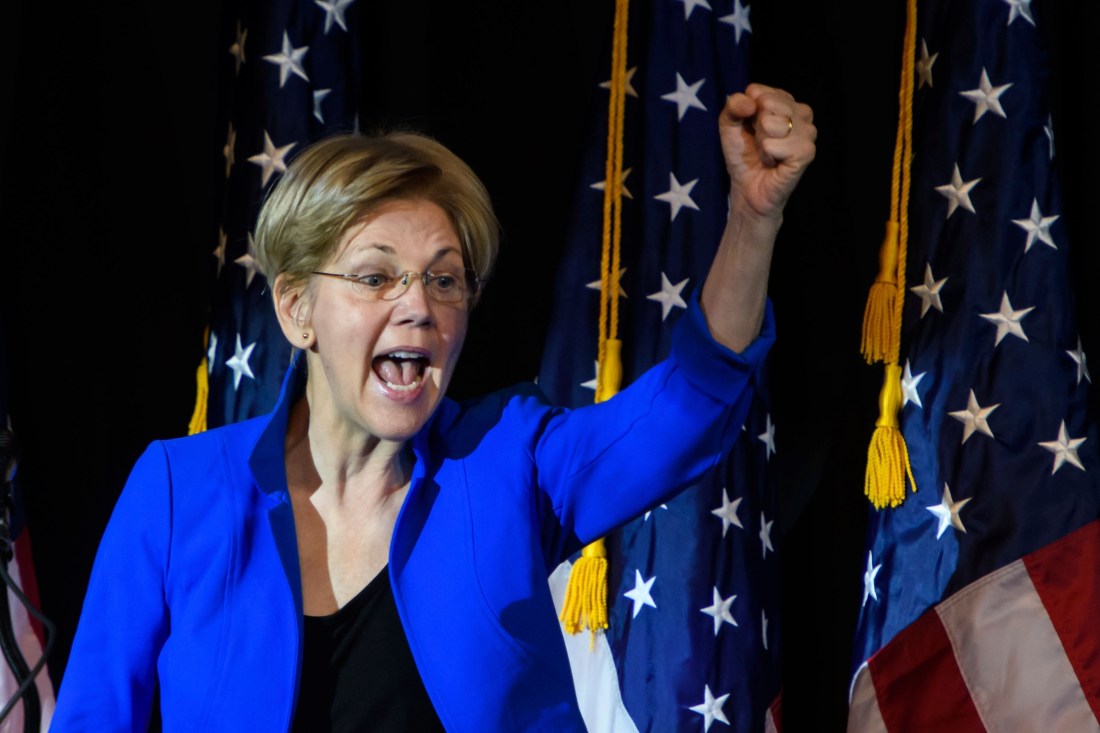
The case for Warren for president.

After Scott Brown won the vacant seat for U.S. senate in Massachussets, an upset that stunned many, it became clear that his seat would be a prime target for democrats come 2012, and that they would have a pretty good shot at taking that seat back. Try to think of something similar to the Doug Jones situation we have on our hands right now.

Ultimately, his challenger was law proffessor Elizabeth Warren, who had never held elected office but managed to get the nomination. While Brown started off with a lead, it kept dwindling until there was nothing left and Warren won with a pretty comfortable margin of 8%.

Since then, Elizabeth Warren has been one of the major voices of the progressive wing of the Democratic party, up there with Bernie Sanders. She has called for universal healthcare, she has endorsed a federal jobs guarantee and has been a staunch defender of a 15$/hour minimum wage.

She’s also not Bernie Sanders. While the senator from Vermont prefers to use the term «democratic socialist», Warren does call herself a capitalist, albeit what she calls «capitalism» is very similar to what Sanders has proposed: a free market economy but with tight regulations. The senator from Massachussets has also consistently voted for military budget expansions, something that most senators do but that Sanders typically doesn’t.

I’m not going to beat around the bush here: Elizabeth Warren is interested in running. She has said so publicly, so she’s at the very least thinking about it, even if a decision hasn’t been made yet. I also find it unlikely, although not impossible, that both Warren and Sanders run. I say this as a kind of disclaimer, because it’s very easy to get trapped in the narrative of vote-splitting and forget that it’s not all that likely. My reasoning for this is the Dave Weigel tweet that I mentioned a couple of entries ago (i.e. this one), the more liberal wing of the party is apparently talking amongst themselves trying to find a candidate so that there are less internal shenanigans. but I’m not ruling out the possibility of both running because, well, disagreements happen, and they could both decide that the other has no idea what they’re talking about when it comes to a path to victory, and that they are totally the guy or gal who is going to win. Just an FYI.

So, I don’t think there is much disagreement on where Warren would fit in the ideological spectrum in the primary. Slightly to the right of Sanders, far to the left of someone like Biden, and perhaps slightly to the left of someone like Kamala Harris. However, what I think is more interesting is where you draw that line. Will Warren be supportive of a jobs guarantee after all? Will she align more with Sanders on foreign policy? Will she break new ground (and I assume it would be to the left)? I guess that’s up to her campaign to decide, but she’s never really been one for changing positions on the fly.

But, assuming she doesn’t, in some way, piss the party’s base off big time, then she probably has a spot guaranteed on the primary. But would she have a chance in early states?

Yeah, definitely. She would probably do worse in Iowa than in New Hampshire, but she could have robust showings on both states. What would that look like? I’m not entirely sure, actually. If I had to guess, I’d say she can pull-off wins in both: a pretty standard 3-4% win in Iowa and a blowout of somewhere around 15% in New Hampshire are very good case scenarios for Warren. For that New Hampshire prediction to hold, she would have to put away some of the competition in Iowa, like Biden and Sanders. I say this specifically because Biden and Sanders would both have major influence in New Hampshire, as would Warren, but if she wants a blowout then she needs to put the New England competition away.

Nevada and South Carolina tend to vote somewhat erratically, but if she does as expected in both and holds the frontlines on Super Tuesday, she’s halfway there.

Now, onto the general election: where would Warren be competitive? She would certainly have appeal in rural, midwestern states like Iowa, Wisconisn or Michigan. Also, a good shot to take back Maine’s second is an honorable mention. However, I’m unsure of how she would do in southern states that are becoming crucial for democrats in recent years. There’s a competitive senate election in Mississippi for crying out loud. In 2020, midwestern states still look like the path of least resistance to a democratic win, but we’ve got a long ways to go. Bottom line is: Warren has a pretty solid map.

So, strengths and weaknesses, here we go!

STRENGTHS:

  • Appeal to the progressive wing of the perty.
  • Appeal in some early states.
  • Warren is, in my opinion, a good debater and a charismatic speaker.
  • She could have the opportunity to unify the progressive vote.
  • Good general election map, with wide appeal in rust belt states.

WEAKNESSES:

  • Potential to fizzle out in between Nevada and Super Tuesday, as more southern states vote.
  • Less appeal with southern voters of color than other potential candidates.
  • Although she has a bit more than Sanders, her appeal to the establishment wing is not very widespread.
  • She has shown that she’s prone to make some gaffes, like the whole thing with the DNA test.
  • Warren hasn’t proven that she can mount a strong campaign outside of Massachussets, and that could be a real problem.

On the whole, I do think Elizabeth Warren has a pretty good chance of winning if she runs, but I’m a bit more skeptical than other analysts. If her and Sanders and whoever else manage to sort everything out internally and none of it spills out into the primary, then she’s sitting pretty. However, if Sanders or Gabbard or X progressive runs simultaneously or some of the internal fighting spills onto the press, she could have a hard time. Time will tell, but it remains that Warren is one of the strongest candidates for the democratic presidential nomination in 2020.


I’m going to make a couple more of these, but be ready for this series of entries to stop. after that, you’ll get my power rankings.