It’s been a week since I started my «The case for» series, and I’ve writen about all the major candidates and three minor ones since. On Sunday, I promised that today I would bring you my power ranking of 2020 democratic presidential contenders, a mere 15 months away from the Iowa caucuses. I’m not going to beat around the bush now, but I’m going to do a whole lot of that after the ranking itself, so there’s no shortage of information. Without further ado, here they are:
- 1: Joe Biden.
- 2: Elizabeth Warren.
- 3: Bernie Sanders.
- 4: Beto O’Rourke.
- 5: Kamala Harris.
- 6: Amy Klobuchar.
- 7: Cory Booker.
- 8: Kirsten Gillibrand.
- 9: Sherrod Brown.
- 10: Steve Bullock.
Some of you may be shaking your clenched fists at the screen in rage, wondering how I could be so stupid to put Harris in 5th or Sanders in 3rd, etc. Just hear me out, ok?
We’ll go from bottom to top, and look at each candidate’s strengths and weaknesses.
10: Steve Bullock: Steve Bullock’s standing in a hypothetical 2020 primary has greatly diminished, at least in my opinion. He’s a moderate governor from the midwest who has been elected thrice to statewide office in a red-ish state, so he could have appeal with rural voters. However, what he was probably hoping for was a lesser wave by Democrats or no wave at all, so that the more moderate narrative about how the party has moved too far to the left would be more palatable among the party’s base. His best chance at staying in public life will probably come from challenging senator Steve Daines, rather than a run for president.
9: Sherrod Brown: the senator from Ohio has proven that he has appeal beyond partisanship, as he won reelection with a comfortable 6% margin while democratic candidate for governor Richard Cordray lost by 4%. He’s part of the populist-progressive wing of the democratic party, somewhere close to Beto O’Rourke, and he would have more appeal in the midwest than other candidates would. He’s also publicly mused about a 2020 campaign, so it’s not like he’s a Michelle Obama. He would be a force to be reckoned with.
8: Kirsten Gillibrand: the junior senator from New York has moved decisively to the left in recent months. She was the first member of the senate to call for abolishing ICE, she’s no longer taking corporate/PAC money, she has endorsed medicare-for-all, called for a 15$/hour minimum wage and criticized Amazon’s opening of an HQ in Queens. She would certainly be a well-funded candidate from a populous state, but she would have to explain some very moderate votes from back when she represented upstate New York.
7: Cory Booker: Booker is an eloquent, charismatic speaker, and he has also moved to the left recently, in a similar way to Kirsten Gillibrand. I’m pretty Booker skeptical for 2 reasons, though: 1- He’s not well liked among progressives for his dealings with Big Pharma, and 2- he may turn off moderates with his newfound lefty message. He could turn out to be a great candidate or a paper tiger, but we’ll just have to see.
6: Amy Klobuchar: it would be hard to imagine a worse year for a candidate like Klobuchar to really shine, because she would almost certainly be the front-runner in a year like 2016 if she had gotten the type of attention that she’s getting now. She’s eloquent, soft-spoken, comes across as truthful and she’s also more of a centrist, which means she could be a female alternative to folks who don’t want to back Biden. She could be a very good candidate, but she’s fighting for the same lane as Biden, and it’s unlikely that she’d emerge victorious from that fight. Oh, and she won reelection in a landslide.
5: Kamala Harris: you may have deducted from my piece on her a couple of days ago that I’m a little bit Harris-skeptical, and you would be correct. I don’t think she’s doing as much as she needs to do to have as good of a shot as folks on CNN think she does. She would, presumably, be a good unity candidate between black voters and the more liberal wing of the party, but none of those groups strike me as incredibly enthusiastic for her. I don’t know, maybe I’m just stupid, but I don’t see it.
4: Beto O’Rourke: I’m still not sure what to make of O’Rourke’s hypothetical campaign, or whether he would actually have a lane to run in. But I basically think there’s 2 ways this can go: either he runs a grassroots campaign that’s very energizing and convinces moderates in the general, or tries to be a unity candidate in the primaries and goes down in flames. We’ll just have to wait; we’re not even all that sure on whether he’s running or not.
3: Bernie Sanders: some people may think this is too high, some may think it’s too low, but I think that it’s about right. The senator from Vermont has proven that he can win over votes by mounting an incredibly competitive challenge to Secretary Clinton in 2016, and he’s currently second in public national polling. The only reason why he’s third and not second in my ranking is because I think Warren is more likely to convince Sanders that it’s her moment than the other way around. But if Bernie runs and Warren doesn’t, then Bernie moves up a spot, perhaps even two.
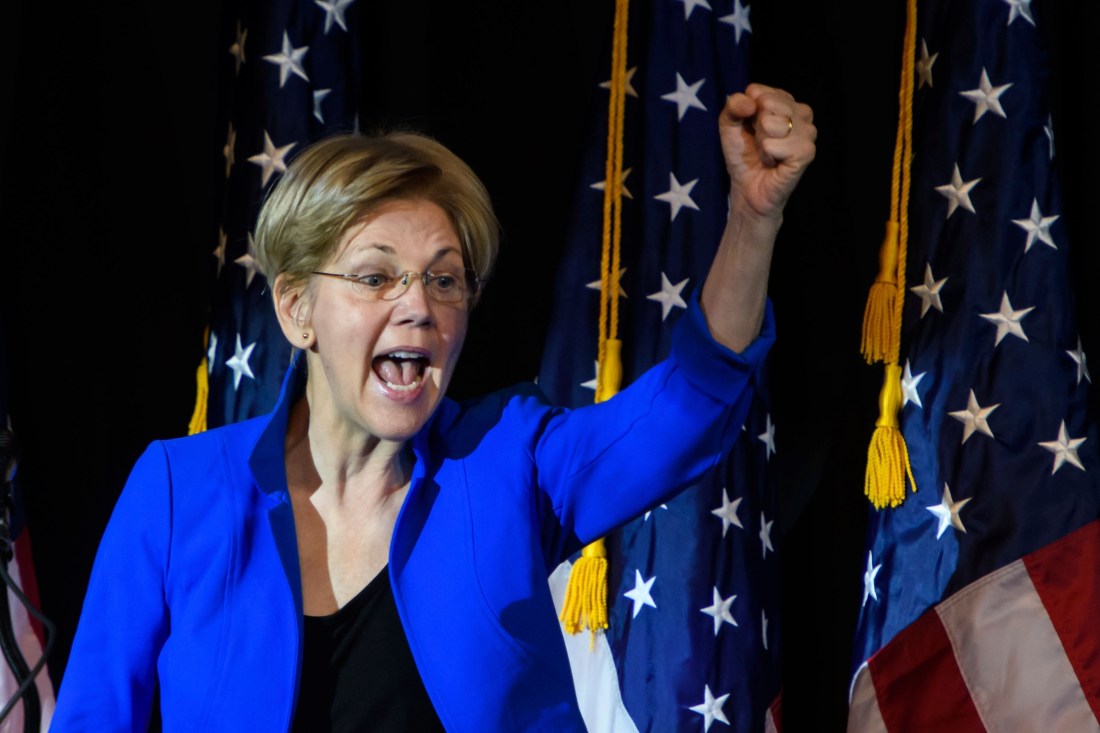
2: Elizabeth Warren: she is the darling of the left wing of the party and a political behemoth; she has made a name for herself in a matter of a couple of years and has been able to fight for both sides of the aisle occasionally. She just seems like an actually good unity candidate, which is something that’s pretty rare these days. While I’m sure a lot of progressives wouldn’t vote for her because she’s not «pure enough», most would pull the lever for her over someone like Biden in a heartbeat. And establishment dems are largely okay with her too, seemingly classifying her as «good enough».
1: Joe Biden: I’m not sure I’ve thoroughly convinced myself that Biden still deserves to be number one, and it also doesn’t feel right. But it feels less wrong, and that’s really what matters. Biden is a mainstay in democratic party politics, a familiar face, and most democrats would be perfectly fine with him. The reason why he’s so high is that he’s likely to crush anyone in the moderate lane of the primary, thus securing that part of the electorate for him. Bernie, Warren, Harris, Booker, Gillibrand: they would all have to fight for the same voters. Biden doesn’t need to do that. Oh, and he’s polling first.
I’m sure people will have their disagreements, I personally disagree with most of the picks on CNN’s list. But I hope I persuaded you on at least one of these picks, and be sure to let me know how much of a cuck I am.
I’ll be right back with you all tomorrow with a piece on the Mississippi special election.
 Ale's blog